Select the XTOOL website you want to visit.
You will only be redirected after selecting a website.
After rotating tires on a Ford, the workshop needs to verify both the inflation pressures and any vehicle-specific TPMS learning requirements. Moving a wheel changes its physical position; it does not automatically mean that the sensor needs new programming or replacement.
The practical question is whether the vehicle recognizes the installed sensors and, where applicable, assigns their readings to the correct wheel positions. A clear before-and-after record makes that question easier to answer and gives the customer a useful explanation of the service.
A post-rotation TPMS relearn is a vehicle-specific process that allows the monitoring system to recognize sensors or their positions after the wheels have moved.
Confirm the model, model year, market and installed TPMS before selecting a procedure. Ford applications do not all share one learning method. Check the current owner's information and relevant service procedure for the actual vehicle, especially when the recommended front and rear inflation pressures differ.
Ford's TPMS owner information for the application shown specifically states that vehicles with different front and rear pressures must be retrained after each tire rotation. Use the manual matching the vehicle being serviced; this example is not a universal Ford reset sequence.
Define the task accurately when comparing TPMS service tools. Reading a sensor, programming a replacement sensor and teaching the vehicle its sensor IDs are different functions. A tool may support one function for an application without supporting every other function.
| Task | What changes? | What to confirm |
|---|---|---|
| Tire rotation | The wheel assemblies move to permitted new positions | Pressures for the new positions and any required position learning |
| Sensor replacement | A sensor or its identity may change | Sensor compatibility, programming if required and vehicle learning |
| Pressure correction | Inflation changes | Correct placard pressure and the applicable display or warning-update conditions |
A sensor-ID position record connects each identified wheel sensor to its physical location before and after the service.
Before rotation, read the supported sensors and label the positions consistently. Preserve each sensor ID exactly as displayed, including whether the tool uses hexadecimal or decimal notation. Compare identifiers in the same format so that a display conversion does not appear to be a different sensor.
Record measured pressure separately from a pressure transmitted by the sensor or displayed on the dashboard. Include the unit and whether the tire is cold. A saved display value may not represent the pressure at the instant the wheel was checked.
NHTSA's tire-safety guidance recommends checking inflation monthly with tires cold and using the vehicle's recommended pressure. It describes cold tires as having been parked for at least 3 hours. The tire sidewall's maximum pressure is not the vehicle's normal inflation specification.
| Position before service | Sensor ID | Position after rotation | Pressure after adjustment | Vehicle position verified? |
|---|---|---|---|---|
| Left front | [Record exact ID] | [Record destination] | [Value and unit] | [Result or not applicable] |
| Right front | [Record exact ID] | [Record destination] | [Value and unit] | [Result or not applicable] |
| Right rear | [Record exact ID] | [Record destination] | [Value and unit] | [Result or not applicable] |
| Left rear | [Record exact ID] | [Record destination] | [Value and unit] | [Result or not applicable] |
This worksheet documents the rotation actually performed; it does not prescribe a rotation pattern. If a spare is included under the vehicle and tire manufacturers' instructions, add a separate row and confirm its TPMS role.
The U.S. Tire Manufacturers Association's Tire Care and Safety Guide explains that rotation patterns can be restricted by tire design or different front and rear sizes, and pressures must be adjusted for the tires' new positions. Treat those mechanical and inflation checks as part of the job.
The correct Ford TPMS relearn method is the procedure specified for the vehicle's monitoring system and the service just performed.
Depending on the application, learning may involve an automatic process, sensor triggering, a diagnostic connection or another prescribed sequence. Confirm entry conditions, wheel order and completion criteria from matching information. Do not copy a sequence from a different Ford simply because the dashboard controls look similar.
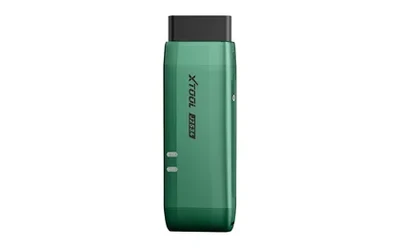
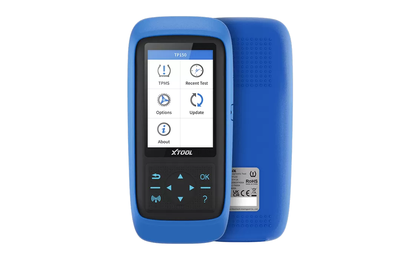
The XTOOL TP150 TPMS service tool is described by XTOOL as supporting sensor reading, checking and relearning, including OBD or sensor-triggering methods on supported applications. Its published activation frequencies include 315 MHz and 433 MHz. Frequency support alone does not confirm protocol compatibility or the correct relearn function for a particular Ford.
If a sensor does not respond, save the result and check the vehicle selection, expected sensor specification and tool setup before recommending replacement. If the sensor responds to the handheld tool but the vehicle does not accept the learning operation, distinguish those results in the job record. They describe different communication paths.
Also establish whether the complaint existed before rotation. A pre-existing TPMS warning, temporary spare or recently fitted aftermarket sensor can change the diagnostic task. Recording it at reception prevents a later warning from being attributed to the rotation without evidence.
Post-relearn verification is the documented confirmation that the required learning process completed and the vehicle's TPMS information is consistent with the serviced wheels.
Record the completion indication, remaining warning status and supported DTC results. Where individual wheel locations are displayed, confirm their association using the manufacturer's prescribed verification method. Where the system does not provide individual positions, state that limitation rather than claiming a four-position display check.
Apply the vehicle-specific conditions needed for readings or warnings to update. A pressure value appearing on the dashboard does not, by itself, prove that every location has been learned correctly. Equally, a warning that remains on needs investigation; repeated resets are not a substitute for finding the cause.
If verification fails, compare the sensor-ID record with the vehicle's stored information where supported. Recheck the exact procedure, inflation, spare-wheel status, sensor compatibility and relevant faults. Save the failed step before changing anything further.
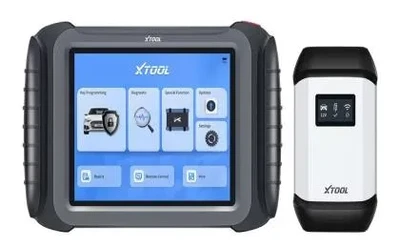
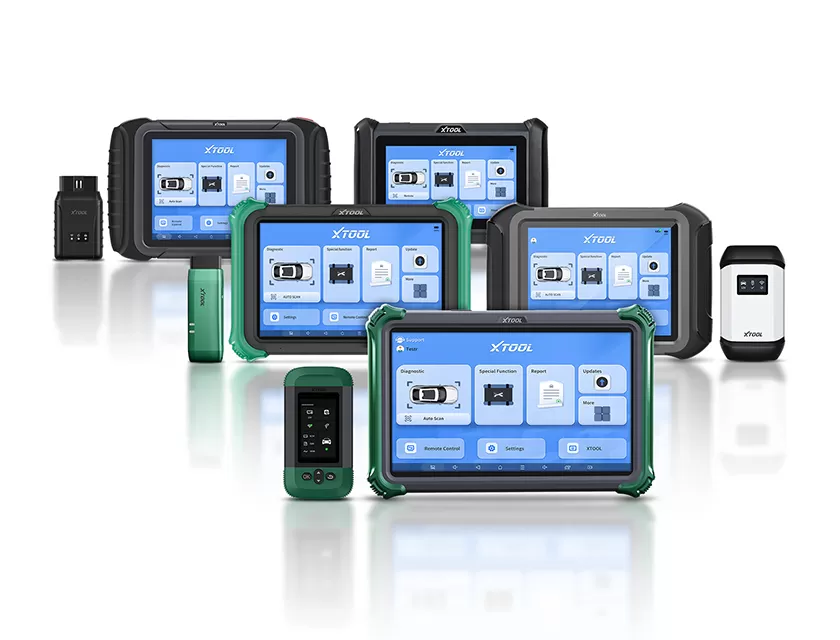
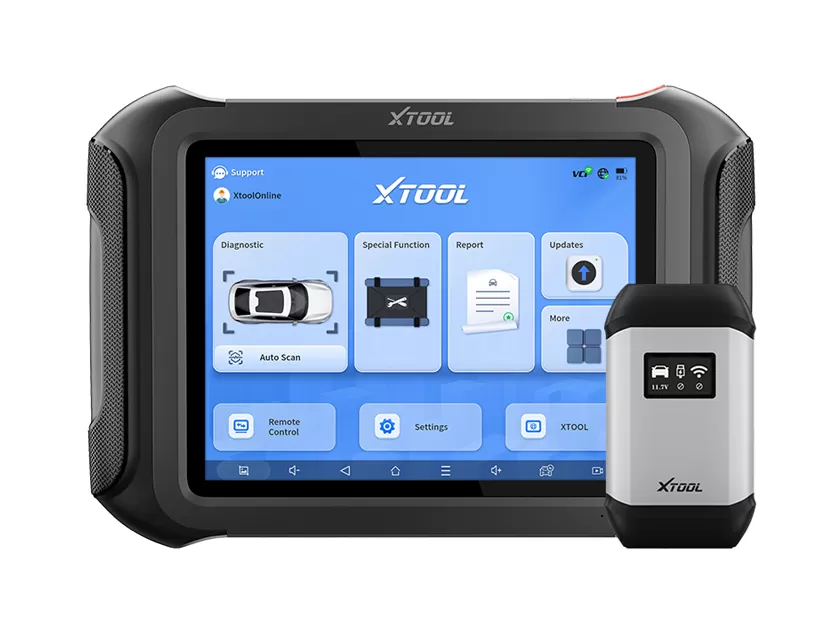
Use XTOOL function coverage information as a starting point and request confirmation for the exact Ford model year, market and task. Provide your workshop's common Ford applications when asking about TP150 or XTireProbe options, and request a demonstration of the required relearn workflow.
A completed Ford post-rotation TPMS service combines correct tire placement and inflation with any required learning and verification.
Keep the sensor IDs, follow matching vehicle information and document the final result. This gives the workshop stronger evidence for both a successful service and any additional diagnosis the customer may need.
These Ford TPMS questions distinguish wheel rotation, sensor identity and vehicle learning.
No. Confirm the method for the model year, market and installed system before starting.
No. Rotation moves the existing wheel assemblies, while replacement can introduce a new sensor or identity.
They connect each sensor to the wheel movement and help compare the installed sensors with supported vehicle records.
A displayed pressure alone does not establish correct position learning. Verify the result as the vehicle manufacturer requires.
Use the matching Ford owner's or service information, then confirm tool support for that exact task.
Review the procedure, sensor IDs and compatibility, pressures, spare-wheel status, warning behavior and relevant fault codes.