Select the XTOOL website you want to visit.
You will only be redirected after selecting a website.
A customer brought in an XPeng P7 with a charging problem. The workshop owner needed a way to investigate the issue, but finding the right diagnostic support was not straightforward.
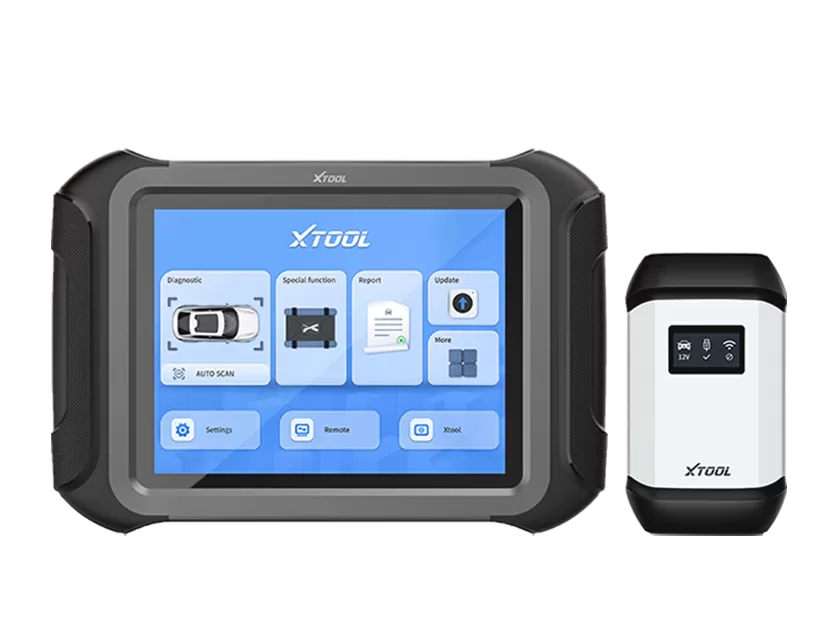
After checking the available options, he found that the XTOOL E2 Pro supported this EV model. He had also followed XTOOL’s progress in new-vehicle software support and recognized the team’s responsiveness as new models entered the market. He contacted XTOOL for technical guidance.
That request brought the vehicle into a real-world testing session. The XTOOL team began collecting and checking diagnostic data to help address the workshop’s needs.
The global EV market continues to expand. According to the International Energy Agency (IEA), electric car sales exceeded 20 million in 2025, accounting for around one in four new cars sold worldwide. The IEA’s Global EV Outlook 2026 also reported approximately 630 battery electric vehicle models available globally.
As the market grows, diagnostic software must keep pace with new models, vehicle systems, and data requirements. For technicians, choosing the right diagnostic tool can make all the difference.
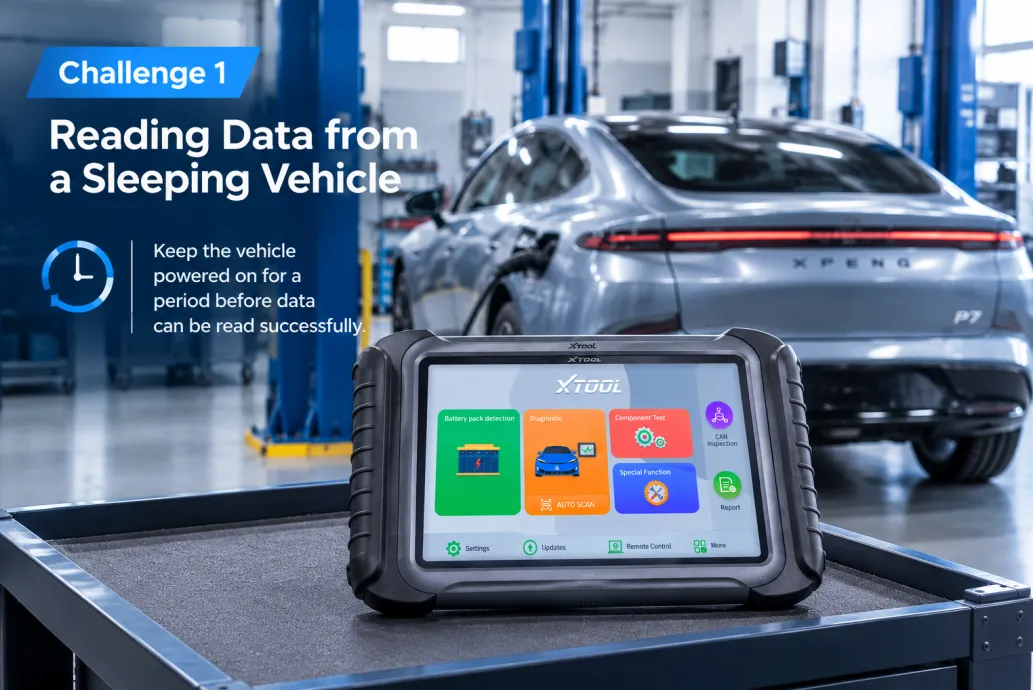
During the XPeng P7 test, the team found that the vehicle needed to remain powered on for more than ten minutes before data could be read successfully. When some readings were unavailable or incomplete, the testing engineer recorded the issue and sent the findings to the software development team.
Engineers investigated the issue and made adjustments. The updated software was then returned to the testing team for another round of vehicle testing. The goal was to verify the changes under real operating conditions, rather than relying on simulation alone.

The next check focused on battery temperature. The team accessed the same parameter through two software paths: Auto Diagnostics and Component Test. The displayed results did not match.
A parameter is not reliable simply because it appears on the screen. The team needed to confirm that the same data was displayed correctly across both functions. After the issue was reported, software engineers made adjustments. The testing engineer then repeated the checks and compared the readings.
Once the temperature readings were verified, the team continued testing other data streams, including those from the vehicle control unit and VCU.
Software simulation and real-world testing serve different purposes. Simulation helps engineers check software behavior in a controlled environment. Testing on actual vehicles can reveal issues that require further investigation under real operating conditions.
The workflow connects both sides. Testing engineers connect diagnostic equipment to vehicles, collect real data, document unexpected results, and report their findings. Software engineers investigate the issues and update the relevant functions. The revised software then returns to the vehicle for verification.
If an issue remains, the cycle continues. Testing, feedback, software updates, and verification work together to improve diagnostic support over time.For XTOOL E2 Pro, this process supports the ongoing development of EV diagnostic coverage and functions. It also connects software development with the conditions technicians encounter in real workshops.
For professional workshops, vehicle coverage matters. So does the quality of the data behind every diagnosis.The XPeng P7 test shows the work behind the screen: real-world testing, engineering feedback, software adjustments, and repeated verification. These steps help ensure that software updates are checked against actual vehicle behavior.Reliable EV diagnostics are not built on a vehicle list alone. They require continuous testing, timely feedback, and careful validation. Explore XTOOL E2 Pro for EV Diagnostics.Contact XTOOL with your vehicle details, battery pack identification, and required functions to confirm the appropriate E2Pro configuration and current coverage.