Select the XTOOL website you want to visit.
You will only be redirected after selecting a website.
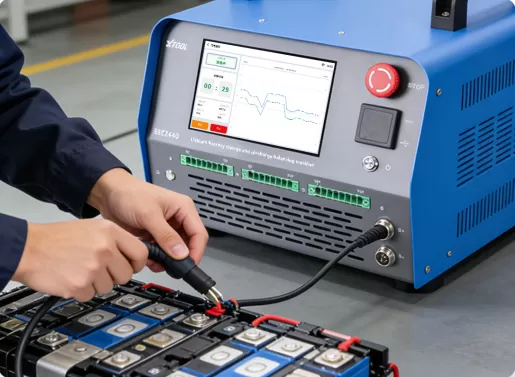
Many people have noticed that a phone or EV charges quickly at first, but slows down as it gets close to full. This does not mean the charger is getting weaker. It means battery charging must be controlled in stages.
For EV battery maintenance, fast charging is not about pushing high current all the way through. A reliable process needs to balance speed, stability, and consistency.
High current can improve early-stage charging efficiency, but continuous high-current input may create heat, accelerate aging, and increase consistency issues. An EV battery pack is made up of many cells and modules. After repeated charge and discharge cycles, some cells may lose capacity, some may develop higher internal resistance, and some may show normal voltage while their real discharge capability has already declined.
If a workshop only checks voltage, it may misjudge the battery condition. To protect the cells, the battery management system may also limit overall charging and discharging performance, which leads to reduced driving range. Battery maintenance should also consider capacity, internal resistance, and module consistency.
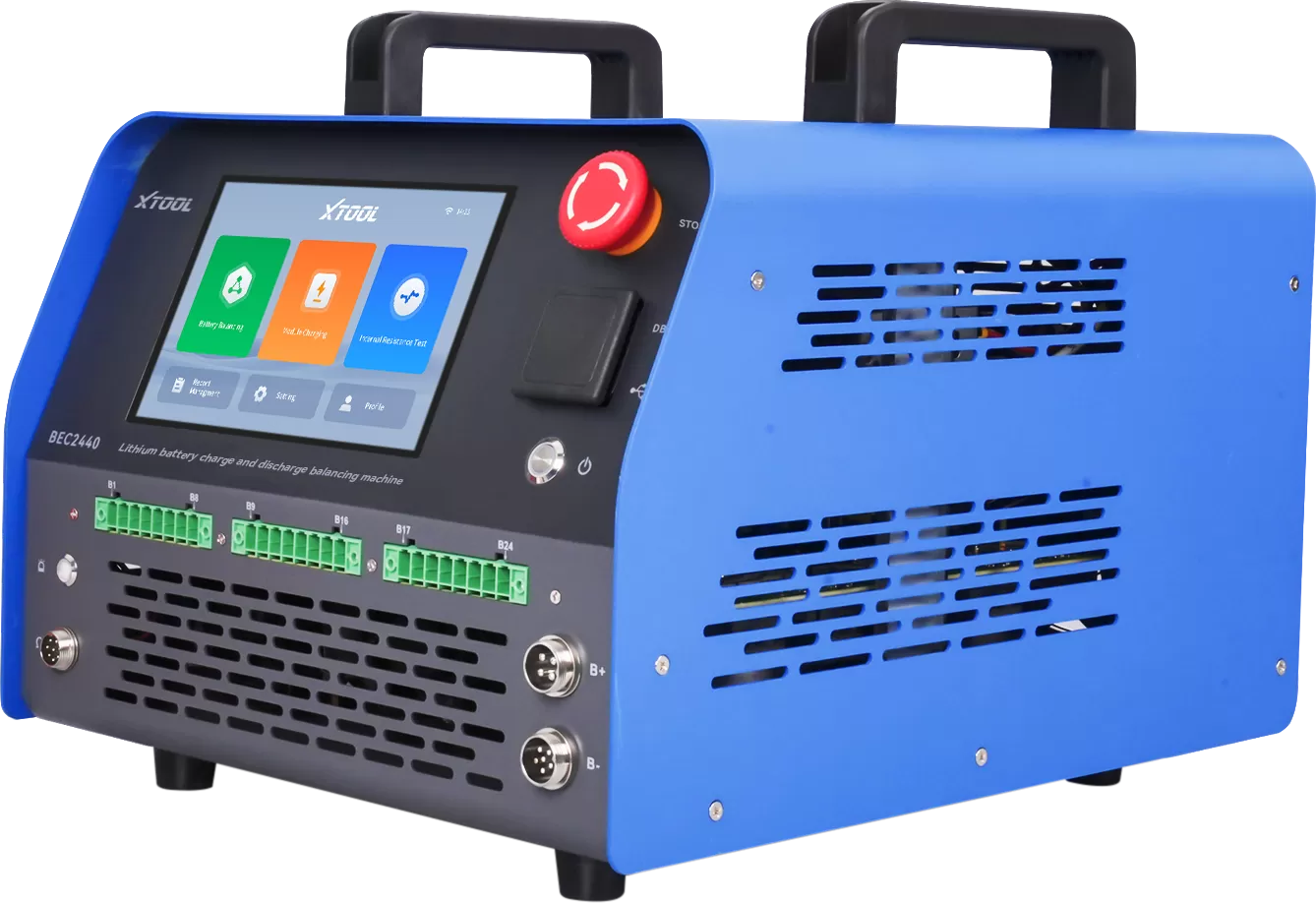
XTOOL BEC2440 supports 40A high-current charging. In the early stage, higher current helps the battery module approach the target state faster and reduces workshop waiting time. This stage mainly solves the efficiency problem.
When the battery module gets close to the target voltage, the device no longer keeps pushing high current. It enters the constant-voltage stage, where the current gradually decreases. This stage mainly improves stability.
The final stage uses gentler low-current supplementation and balancing to bring different modules closer to the same state. For EV battery maintenance, normal voltage in one module is not enough. Module consistency also affects later performance.
BEC2440 does not simply output a fixed current. Its AI charging model adjusts the charging strategy according to battery condition. Its value is not making charging faster all the time, but helping the device decide when to charge quickly, when to slow down, and when to start balancing. This helps workshops standardize battery maintenance and reduce reliance on manual experience.
As EV ownership grows, battery-related services will expand from specialized battery repair centers to more general repair shops. BEC2440 helps workshops improve early-stage charging efficiency, build a more standardized charging, discharging, and balancing process, reduce misjudgment caused by relying only on voltage, and expand EV battery maintenance service capability.
Ready to expand your workshop’s EV battery module charging, discharging, and balancing services? Contact us through the form below to learn more about BEC2440’s configuration, applications, and pricing options.