Select the XTOOL website you want to visit.
You will only be redirected after selecting a website.
XTOOL offers a wide range of smart automotive diagnostic solutions, from coding-focused tablets to advanced platforms that support module programming through J2534 pass-through and OEM software. Understanding where each device fits on the spectrum from “coding only” to “full module programming support” is essential if you want to avoid comebacks, failed retrofits, and unnecessary tool costs. This guide explains the difference between module coding and programming, shows which XTOOL devices support each function, and helps workshops and locksmiths choose the right tool for their real-world jobs.
XTOOL defines ECU coding and ECU programming as related but different functions that both work on vehicle control modules, but at different depths.
In the H6 Pro Master user manual, “Programming and Coding” is described as the process of re-flashing vehicle control modules, updating ECU software, and reprogramming adaptive data after repairs or replacements.
ECU coding changes configuration or adaptation data inside an existing module after a part change or retrofit. This may include:
Injector coding.
Enabling hidden features.
Language or region changes.
Module variant selection.
Coding is usually used when the module is already working, but its settings need to be adjusted to match the vehicle.
ECU programming writes or updates the module’s actual firmware or calibration by loading a new software package from the OEM or an update database. This is required to:
Fix software bugs.
Address drivability issues.
Install a blank replacement module.
Apply factory-level software updates.
XTOOL notes that online ECU programming typically requires a stable internet connection, a wired connection to the vehicle, and use of a J2534 pass-through interface with OEM diagnostic software. Some brands may also limit how many times a module can be programmed, and success can depend on the hardware version of the ECU.
In simple terms: coding changes configuration data, while programming rewrites the ECU’s core software using OEM-level processes.
Module programming support depends on whether the device can work as a J2534 pass-through interface and support OEM software, not just whether it offers coding inside the app. The H6 Pro Master manual shows an “ECU Coding & Programming” section and describes a dedicated J2534 pass-through mode that runs OEM software on a PC. That is the main path to full module programming.
| Category | Capability | Typical Use |
|---|---|---|
| Coding-focused tablets | Full-system diagnostics, bi-directional tests, special functions, ECU coding | Maintenance, service work, retrofits, and everyday repair tasks |
| J2534-capable programming platforms | Coding functions plus OEM ECU programming through pass-through mode | ECU replacement, factory software updates, and dealer-level programming work |
On the product side, XTOOL markets several professional diagnostic tools with ECU coding, while OEM ECU programming is usually emphasized on higher-end products or bundled configurations. A good example is the PRO-level PRODIGY scanner, which is advertised as supporting OEM ECU programming, coding, and full-system diagnostics.
A common buyer mistake is assuming that if a scanner can code a module, it can also flash the module’s base software. That is not always true.
The H6 Pro Master manual states that available programming and coding operations vary by test vehicle and that only supported operations will appear in the menu. It also warns that some brands, including BMW, may limit programming based on how many times a module has already been programmed and on the control module hardware version.
This means a tool may successfully perform coding but still be blocked from full software re-flashing.
To cover more scenarios, XTOOL provides J2534 pass-through capability so workshops can run OEM software such as Ford FDRS, GM SPS2, or VW ODIS on a PC using the XTOOL VCI as the physical interface. However, if an OEM requires its own branded interface or an online subscription for a specific operation, the device will still be limited to coding and bi-directional controls, not full re-flash.
In practical terms: a device can often code modules even when full flash programming is restricted by OEM security, subscription requirements, hardware limitations, or the device’s own capability level.
XTOOL’s diagnostic platforms are designed to cover more than 80+ vehicle brands worldwide for diagnostics, coding, and special functions, with a subset supporting OEM-style software programming through J2534.
The D7 series, D8 series, and higher-end tools are compatible with many mainstream brands, including Ford, GM, Toyota, Honda, BMW, and Mercedes-Benz for broad diagnostics and service functions. Key programming tools such as X100 MAX also support widely used brands like Volkswagen, Toyota, Honda, BMW, and Ford.
For J2534-based programming, the pass-through driver is brand-agnostic and depends on the OEM software you install on the PC. That means:
Programming coverage is mainly limited by whether the OEM supports J2534 for that ECU.
Coding coverage is controlled inside the scanner’s own application.
It helps to compare the two capability levels side by side before buying.
| Dimension | Coding-Focused XTOOL | Coding + Programming XTOOL |
|---|---|---|
| Main functions | Full-system diagnostics, bi-directional tests, special functions, ECU coding | Everything in coding-focused tools plus J2534 pass-through for OEM ECU programming and software updates |
| Module software re-flash | Not supported directly; relies on OEM dealer tools | Supported via OEM PC software and the J2534 interface, subject to OEM subscription and limits |
| Typical user | Independent garages, mobile technicians, DIY power users | High-end workshops, dealer-level independents, locksmiths needing OEM-style programming workflows |
| Risk level | Lower risk; wrong coding can usually be reversed more easily | Higher risk; failed flash can brick modules if voltage or communication is unstable |
| Infrastructure required | Tablet, Wi‑Fi, and a healthy vehicle battery | Tablet, PC, OEM subscriptions, wired connection, and a professional power supply |
| Investment level | Medium | Higher |
Choosing the right device starts with deciding whether you only need fast, profitable coding and service work, or whether you also need OEM-style ECU programming in-house.
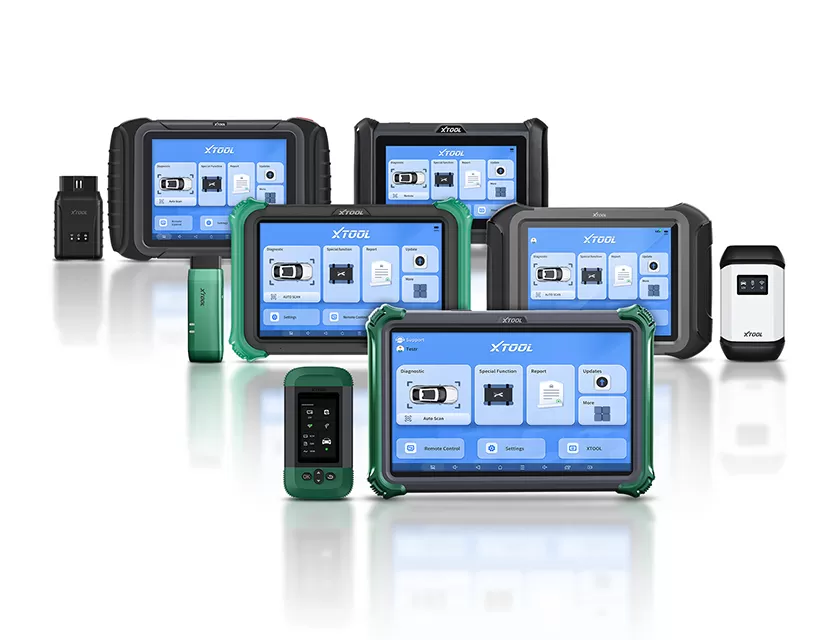
XTOOL positions its product families for different use cases, including diagnostic tablets, key programmers, TPMS tools, and EV diagnostic systems. For example, the D7 series is a strong coding-focused option for broad repair work, while H6 Pro Master combines advanced coding with wired programming support and J2534 pass-through.
List the vehicles and jobs you actually see.
Check the brand, model, year, and systems you handle most often.
Decide whether you truly need programming.
If you mostly do maintenance, service resets, basic retrofits, and hidden-feature enabling, a coding-focused device is usually enough.
If you replace ECUs, perform calibration updates, or want dealer-level module setup, you need a J2534-capable platform.
Assess your shop infrastructure.
OEM-style programming requires stable wired networking, a quality battery maintainer, and at least one updated Windows PC.
Estimate ROI using realistic numbers.
Many independent shops charge for programming as a separate labor item, and a shop that markets the service consistently can create a meaningful monthly revenue stream.
Plan training and risk management.
Programming requires procedures, checklists, and sometimes OEM training. Stable voltage and uninterrupted communication are essential.
No. Most mid-range devices focus on diagnostics, coding, and service functions, while full ECU programming is generally limited to higher-end platforms used as J2534 pass-through interfaces with OEM software.
Yes. The J2534 capability provides the hardware interface, but the actual programming logic and calibrations come from OEM PC software and online servers, which typically require paid subscriptions or access rights.
Failed flash events can be caused by low battery voltage, poor cable connections, or interrupted ignition cycles. In some cases, the module can be recovered by re-running the procedure, but there is always a risk of making the ECU inoperable.
Generally, yes. Coding changes configuration or adaptation data and is less likely to brick an ECU. Programming writes the module’s core firmware, so voltage drops, incorrect software packages, or interruptions carry a much higher risk.
For many diagnostics, service resets, special functions, and advanced key programming, XTOOL can significantly reduce reliance on dealer tools. However, security-sensitive operations, brand-specific online functions, and very new models may still require OEM equipment.
Product updates and documentation are refreshed regularly, with new brands, systems, and functions added over time. Keeping subscriptions active is important for maximum coverage.
For most independent workshops, the best path is to start with a strong coding-capable device and then add J2534-based programming capability if your business truly needs OEM-style ECU flashing in-house. This layered approach lets you monetize quick wins such as service resets, special functions, key programming, and coding, while gradually building the infrastructure and training needed for safe, reliable programming. By understanding the practical difference between coding and programming, checking coverage before purchase, and planning ROI with realistic job counts, you can choose the right device and turn advanced diagnostics into a consistent revenue stream.