Select the XTOOL website you want to visit.
You will only be redirected after selecting a website.
Intermittent engine faults can be difficult to diagnose because the symptom may disappear before a technician connects a scan tool. Replacing parts based on a diagnostic trouble code (DTC) alone can lead to unnecessary costs and repeat visits.
Understanding freeze frame data in automotive diagnostics and comparing it with live data gives technicians a more structured way to investigate these faults. XTOOL diagnostic tools can help workshops access supported vehicle data and investigate fault conditions, depending on the vehicle and tool configuration.
Freeze frame data is a snapshot of selected vehicle operating parameters recorded by the control module when a qualifying fault is detected.
Depending on the vehicle and fault, the recorded information may include engine RPM, coolant temperature, calculated load, vehicle speed, and fuel-system status. These values help technicians understand the conditions associated with a DTC rather than simply identifying which system reported a problem.
The U.S. Environmental Protection Agency's OBD regulations and diagnostic requirements describe the role of stored operating conditions in emissions-related diagnostics.
Freeze frame data has limitations: it is not a continuous recording of the entire event, and available parameters vary by vehicle and fault. Some systems may retain only selected snapshots or prioritize particular faults.
Important: Save the original DTCs and available freeze frame records before clearing codes. Clearing diagnostic information may erase evidence needed for the investigation.
Live data displays supported vehicle parameters as they change during the current diagnostic session, allowing technicians to observe whether a suspected condition can be reproduced.
Unlike a snapshot, live data can show how engine speed, temperature, load, and other parameters change during a test. This makes it useful when investigating a fault that appears only during warm-up, acceleration, idling, or another specific operating condition.
The Snap-on OBD-II service-mode reference distinguishes current powertrain data from stored freeze frame information.
| Comparison factor | Freeze frame data | Live data |
|---|---|---|
| Time reference | Conditions captured around a fault event | Current operating conditions |
| Main purpose | Identify circumstances associated with a DTC | Observe parameter changes and reproduce symptoms |
| Typical information | RPM, load, temperature, and other supported values | Current RPM, sensor readings, fuel trims, and other supported PIDs |
| Main limitation | Limited snapshot; may be unavailable | May not capture a fault that does not recur during testing |
| Best use | Establish a starting diagnostic hypothesis | Test that hypothesis under relevant conditions |
The strongest approach is to use both: freeze frame data helps identify the conditions to investigate, while live data helps determine whether the suspected behavior can be observed again.
Freeze frame and live data comparison is the process of evaluating recorded and current parameters under sufficiently similar operating conditions to determine whether a suspected fault can be reproduced.
Start with the DTC and identify which parameters are relevant. Record at least three key variables where available: engine RPM, coolant temperature, and calculated load. Add other relevant PIDs according to the fault and the manufacturer's diagnostic procedure.
The following figures are illustrative teaching data, not measured XTOOL test results or universal normal ranges.
| Parameter | Example freeze frame | Example live data | Interpretation |
|---|---|---|---|
| Engine RPM | 1,850 rpm | 750 rpm | The engine is operating at different speeds |
| Coolant temperature | 92°C | 95°C | Both readings indicate a warm engine, but conditions are not identical |
| Calculated engine load | 48% | 18% | The current load is substantially lower |
| Vehicle speed | 55 km/h | 0 km/h | Driving conditions have not been reproduced |
These values demonstrate why comparing readings without considering operating conditions can be misleading. A parameter that differs between the two records does not automatically indicate a faulty component.
If the original fault occurred under load, an idle-only test may not reproduce it. Follow the appropriate service procedure, use safe test conditions, and record the relevant parameters together. Where supported, graphing multiple PIDs can make changes easier to identify.
XTOOL's Gasoline Diagnostic Tools provide a starting point for evaluating equipment against your workshop's vehicle coverage and diagnostic requirements.
Intermittent fault investigation uses recorded evidence to narrow down possible causes and determine which test should be performed next.
For example, if a vehicle records an engine fault during acceleration but runs normally at idle, the technician should first examine the stored operating conditions and relevant DTC information. The next step is to determine whether the symptom can be reproduced and which parameters change when it occurs.
A useful workflow is to preserve the original scan, identify relevant parameters, compare readings under similar conditions, and test a specific diagnostic hypothesis. Fuel trims, airflow measurements, temperatures, and other readings should be interpreted in the context of the engine design and applicable service information.
The EPA's OBD inspection guidance emphasizes recording diagnostic results and preserving relevant fault information before repair-related clearing procedures.
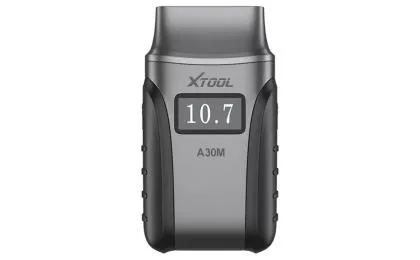
XTOOL's A30M diagnostic tool is one option to evaluate for supported data-monitoring tasks. Before purchasing, confirm the specific vehicle coverage and whether the required recording, graphing, or export functions are available on the selected configuration.
For broader diagnostic context, see XTOOL's existing guide to reading OBD2 codes and understanding what they mean.
Freeze frame vs. live data is not an either-or choice. Freeze frame data provides evidence about the conditions associated with a fault, while live data helps technicians investigate current behavior and determine whether a suspected problem can be reproduced.
XTOOL recommends preserving diagnostic evidence, comparing relevant parameters under appropriate conditions, and verifying the repair rather than treating a DTC as proof of a failed component. Workshops can evaluate diagnostic equipment based on the vehicles they service and the data functions their diagnostic workflow requires.
No. Freeze frame data is a stored snapshot associated with a fault, while live data shows current parameter values during a diagnostic session.
Not by itself. It provides evidence about operating conditions, but further testing is normally needed to confirm the cause of a fault.
The vehicle may be operating under different conditions, such as engine speed, load, or temperature. Compare relevant parameters under similar conditions before drawing conclusions.
Start with the DTC and relevant available parameters. Engine RPM, coolant temperature, and calculated load can provide useful context for many engine-related investigations, but the appropriate data depends on the specific fault.
No. Save the original DTCs and available freeze frame records first because clearing codes may erase important diagnostic evidence.
No. Supported parameters and recording, graphing, or export functions vary by tool, software version, and vehicle. Confirm the required capabilities before purchasing diagnostic equipment.