Select the XTOOL website you want to visit.
You will only be redirected after selecting a website.
A useful used EV diagnostic inspection report explains what the workshop observed, how it obtained the information and what the results cannot establish. A clean fault-code scan is valuable evidence, but it is not a measurement of remaining battery capacity or a guarantee of future range.
For an independent workshop, the report is also the customer's main decision document. Clear test boundaries, traceable readings and practical recommendations make that document more useful than an unexplained battery-health score.
A used EV diagnostic inspection is a documented assessment of accessible electronic systems and agreed vehicle functions under recorded test conditions.
Begin with vehicle identity, odometer reading, inspection date and the customer's requested service. Confirm the model year, market, battery variant where identifiable and software configuration relevant to the inspection. State whether the work includes a system scan, visual inspection, charging demonstration, road assessment or a separate capacity test.
Identify the systems actually accessed rather than writing “full vehicle passed.” Depending on the vehicle and available coverage, the scope may include the BMS, charging controls, thermal management, drive electronics, braking and body systems. A module that is absent from the scan needs an explanation: not fitted, not supported, inaccessible or not inspected.
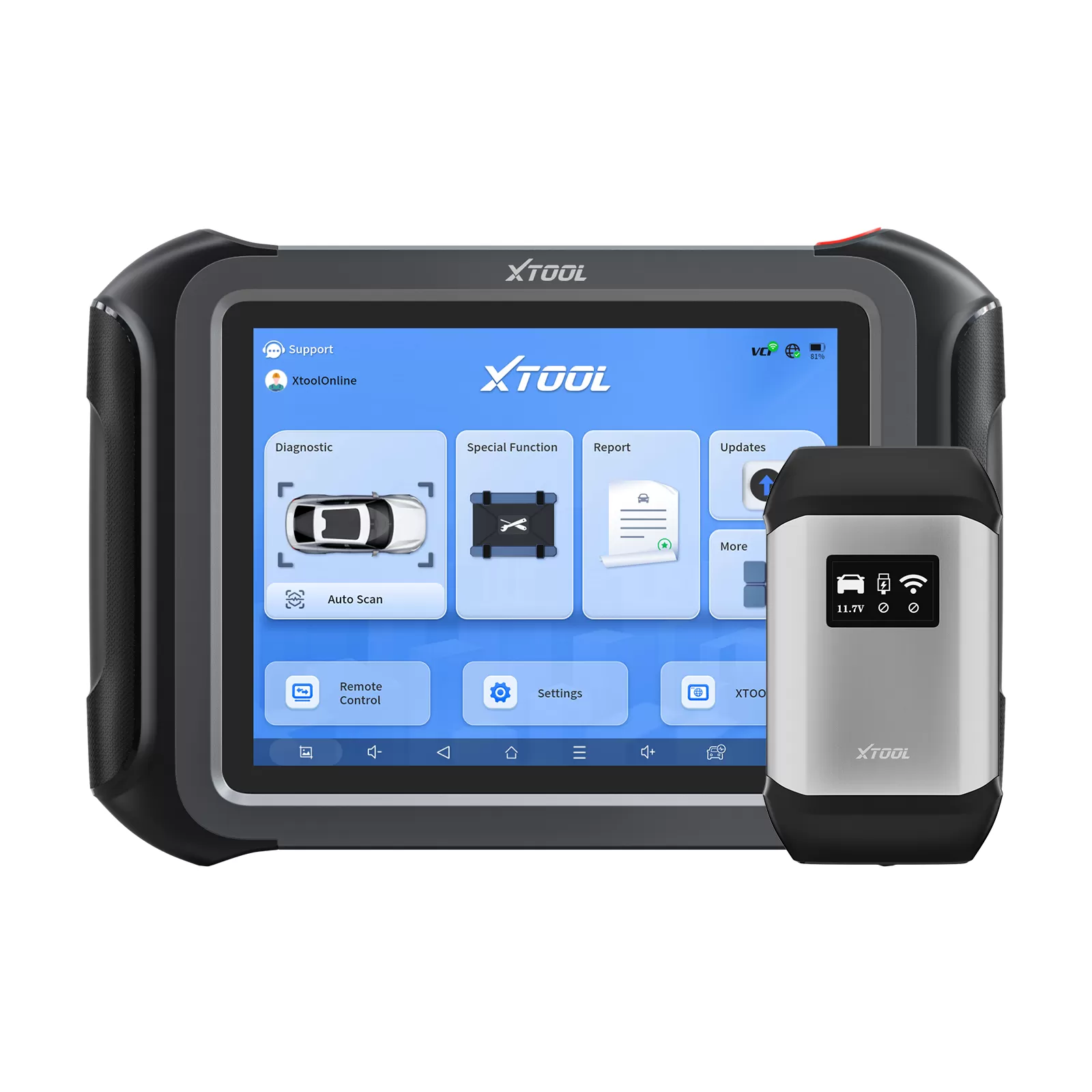
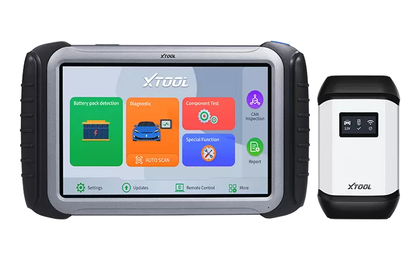
Choose EV diagnostic equipment around the inspection service you intend to sell. XTOOL's EV platforms are options to evaluate, but the required data must be demonstrated on the target vehicle application before it becomes a promised report field.
Include a dated NHTSA VIN recall search for applicable U.S. vehicles. NHTSA uses the vehicle's 17-character VIN and explains that the search does not show every category of campaign or every recently announced recall. A scan and a recall lookup answer different questions.
Inspection data is useful when each reading has an identifiable source, unit, timestamp and operating condition.
Save supported DTCs with their module and status, then capture the conditions needed to interpret the battery data. These may include state of charge, pack temperature, displayed pack voltage, charging state and any BMS-reported health or capacity-related fields. Label an unavailable value as unavailable; never convert a missing response into zero.
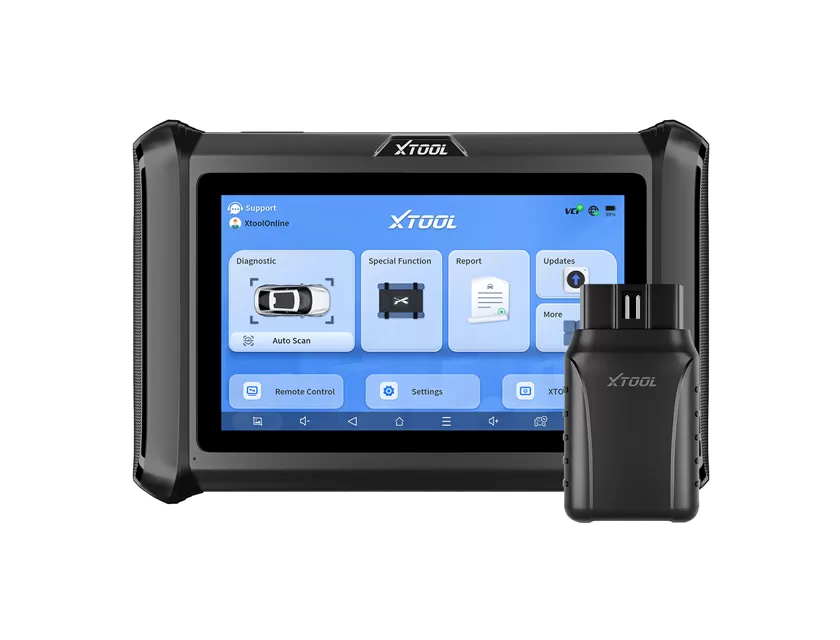
For the XTOOL E2S diagnostic platform, request a demonstration of the precise vehicle, BMS fields and report workflow needed by your workshop. Confirm how screenshots, scan results and notes will be retained. A product-level battery-testing description does not establish access to every parameter on every EV.
| Evidence | What it can support | What it cannot establish by itself |
|---|---|---|
| DTC scan | The codes and statuses reported by accessible modules at inspection | Absence of every mechanical, electrical or intermittent fault |
| BMS-reported SOH | The health value returned by that system, using its own definition | Independent confirmation of usable capacity or warranty eligibility |
| Cell or module voltage data | A snapshot of supported voltage channels under recorded conditions | A complete capacity, insulation or pack-safety assessment |
| Controlled capacity test | Energy measured within a defined test window and methodology | Identical results under all temperatures, loads or driving conditions |
| Dashboard range estimate | The vehicle's displayed forecast at that time | A fixed driving range or direct measurement of battery degradation |
Retain original units and the exact parameter label. If a field says “remaining energy,” do not rename it “full battery capacity.” If a pack contains grouped voltage channels, identify the grouping rather than presenting each channel as an individually measured cell.
State of health, or SOH, is a battery-condition indicator whose meaning depends on the reporting system or test method.
Write “BMS-reported SOH” when the tool retrieves an OEM value. Write “measured usable energy” only when an appropriate measurement procedure was actually completed, and describe its temperature, charge window and reference. Do not turn a dashboard estimate or a single voltage reading into a measured SOH percentage.
For a clearly hypothetical calculation, 54 kWh divided by a comparable 60 kWh usable-energy reference equals 90%. That arithmetic becomes meaningful only if both figures use compatible methods and boundaries. Dividing a measured usable figure by a manufacturer's gross pack rating can create a misleading percentage.
The U.S. Department of Energy's EV maintenance guidance notes that many manufacturers offer battery warranties of 8 years or 100,000 miles. Those figures are background information, not a universal degradation threshold. Verify the particular vehicle's warranty terms, age, mileage and applicable conditions separately.
Range also needs context. FuelEconomy.gov's cold-weather guidance explains that temperature and cabin heating can materially affect EV energy consumption and range. Therefore, a winter range complaint should not automatically be reported as permanent capacity loss.
When a field is unavailable, explain the effect on the conclusion. “No supported SOH parameter returned; capacity was not measured” gives the customer useful information. A blank box or “battery good” conceals the same limitation.
A customer-ready EV report connects each finding to evidence, an inspection limit and a proportionate next action.
Use a consistent record for every significant finding: the system inspected, observation, supporting image or log, test conditions and recommended follow-up. Separate immediate observations from historical fault codes and from work that the customer declined or the workshop could not complete.
| Field | Example wording to adapt to actual evidence |
|---|---|
| Observation | A stored charging-related DTC was returned by the charging-control module. |
| Evidence | Attach the original code, status, timestamp and associated scan image. |
| Limit | DC fast charging was not tested; no conclusion is made about that function. |
| Next action | Obtain authorization for the corresponding OEM diagnostic procedure before purchase decisions rely on charging performance. |
Preserve the initial scan before considering any code clearing. If further testing involves clearing codes, record authorization and explain that the later scan represents a changed vehicle state. Pack opening and high-voltage electrical testing require a separately defined service and appropriately qualified personnel.
Before advertising a report package, review supported EV diagnostic functions and ask XTOOL to confirm the requested model-year coverage. Send your main vehicle applications and required report fields to request a representative demonstration. This makes the equipment discussion specific to your inspection business.
A reliable used EV inspection report is an evidence-based account of the tests completed and the questions that remain open.
Record the scope, preserve data sources and distinguish BMS estimates from measured capacity. A report built this way helps buyers understand the vehicle and helps workshops explain the value of both the initial inspection and any justified follow-up testing.
These used EV inspection questions explain the main boundaries of scan-based battery and vehicle reporting.
A scan may retrieve capacity-related estimates, but an independent capacity measurement requires a defined test method. Identify which type of evidence the report contains.
No. Warranty eligibility depends on the manufacturer's applicable terms and assessment process.
Mark it unavailable, explain the inspection limitation and recommend further testing only when it addresses a relevant unresolved question.
Include the accessible systems within the agreed scope, such as battery, charging, thermal management, drive, braking and body electronics.
Preserve the initial evidence first. Any clearing should belong to an authorized test plan and be disclosed in the report.
State which functions were not tested, which modules were inaccessible and which conclusions require another procedure.