Select the XTOOL website you want to visit.
You will only be redirected after selecting a website.
When DPF regeneration will not start, establish whether the ECU is refusing the request, a required condition is missing or the tool cannot perform that specific operation. A visible regeneration menu does not prove that the current engine state is eligible.
For diesel workshops and small fleets, the next useful step is to document the reason for inhibition and follow the engine manufacturer's diagnostic process. Repeating a request without understanding the refusal can waste workshop time and leave the underlying fault unresolved.
A DPF regeneration inhibit is a control state that prevents the requested soot-burning process from starting or continuing under the current conditions.
Possible explanations include unmet operating prerequisites, an active fault, an inhibit-switch state, a missing permission or a soot-load condition outside the permitted service routine. The exact rules depend on the engine, ECU calibration and vehicle
installation. Some systems also distinguish a driver-requested parked regeneration from a diagnostic-tool service regeneration.
Confirm what the tool actually reported. “Request sent,” “conditions not met,” “function unsupported” and “routine aborted” are different results. Save the full message, selected system and timestamp before changing the vehicle state.
Compare diesel diagnostic tools by engine and aftertreatment coverage, not by the presence of a generic DPF icon. Establish whether the required capability is reading data, identifying an inhibit reason, initiating a supported service routine or documenting the outcome.
The DTNA Walk-In Van Driver's Manual section on parked regeneration illustrates application-specific logic: its driver-switch procedure requires the DPF lamp to be illuminated and describes an optional inhibit switch. Those conditions belong to that installation and must not be imposed on every scan-tool regeneration routine.
A regeneration pre-check is a record of supported fault, sensor and permission data used to determine whether the OEM procedure allows the requested operation.
Identify the engine family, model year, ECU and calibration before interpreting the data. Where supported, preserve active and stored fault codes, reported soot loading, differential pressure, exhaust temperatures, coolant temperature and relevant switch or interlock states. Record parameter names and units exactly.
Distinguish measured values from ECU estimates. A soot-load percentage is often a calculated parameter; its service meaning depends on the manufacturer's definition. Differential pressure also needs operating context. A reading without engine speed, load and the specified test condition does not establish that the filter needs regeneration.
| Possible inhibit category | Data or observation to preserve | Required next reference |
|---|---|---|
| Operating prerequisite not met | Coolant state, fuel level and relevant stationary-operation conditions where available | The engine's regeneration entry conditions |
| Switch or interlock state | Inhibit, parking-brake, transmission, PTO or pedal status as applicable | The vehicle installation's operating instructions |
| Active engine or aftertreatment fault | Exact DTC, status and related sensor data | The OEM fault-diagnostic procedure and inhibit logic |
| Loading or service restriction | Reported soot/ash information and pressure evidence under specified conditions | The permitted service-regeneration, cleaning or repair path |
| Tool or communication limitation | Engine selection, tool software version, connection and exact rejection message | Confirmed application-level function coverage |
This table organizes an investigation; it does not define universal minimum temperatures, fuel levels or soot percentages. Copy the actual limits from matching current service information into the job record.
If a temperature or pressure value is implausible, investigate its cause using the applicable procedure. Repeating regeneration cannot establish whether a sensor, hose, wiring path or underlying engine problem is responsible for the reading.
Forced regeneration is the wrong next step when the applicable procedure does not permit it, the fault requires another repair or the workshop cannot meet the operating conditions.
Separate soot accumulation from ash loading. The EPA's DPF Operation and Maintenance technical bulletin explains that filters also collect noncombustible ash and require appropriate cleaning. Burning soot does not remove that noncombustible material. The bulletin also emphasizes diagnosing engines or filters that require unusually frequent cleaning.
If the manufacturer directs filter removal, inspection, cleaning or a fault repair at the observed condition, follow that path. Do not clear faults simply to conceal an inhibit or bypass a protective interlock. A customer's request for a regeneration does not establish that regeneration is the appropriate repair.
High-temperature operation also affects service planning. Cummins' driver tips for EPA 2013 fire and emergency vehicle engines advise allowing up to 1 hour for parked regeneration and note that exhaust and surface temperatures can remain elevated for 3–5 minutes afterward. These are application-specific planning figures, not a completion-time promise or a universal safe-touch interval.
Use the matching current engine and vehicle instructions for location, exhaust clearance, supervision and stopping conditions. Confirm an appropriate work area before initiating any permitted routine, and stop as the instructions require if an unsafe condition develops.
Regeneration verification records whether the supported routine was accepted, completed or interrupted and what the post-test evidence shows.
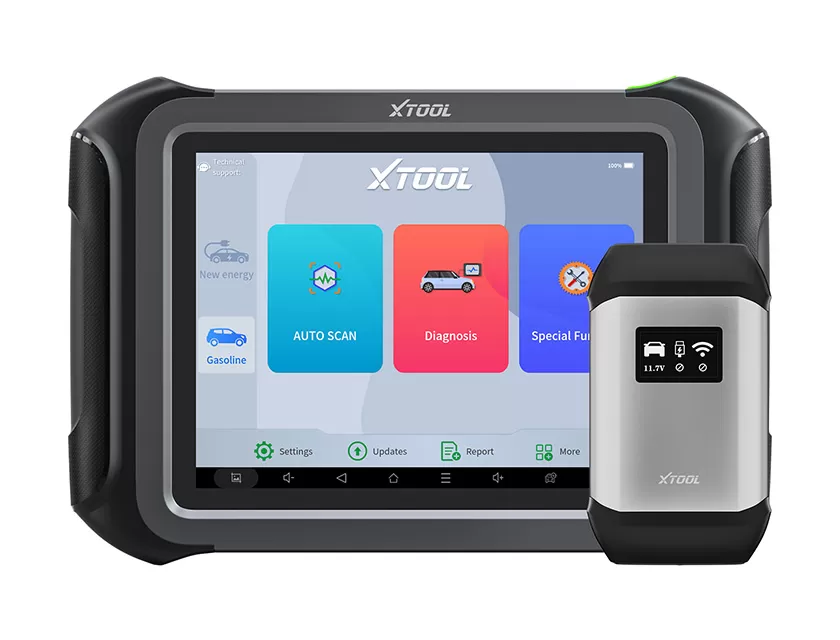
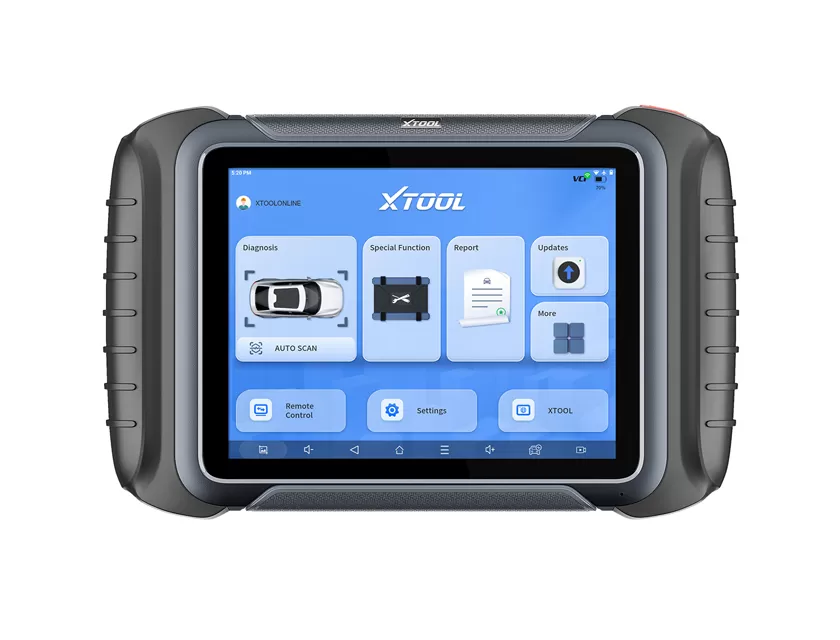
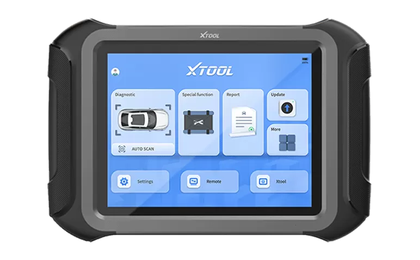
On supported vehicles, XTOOL D9HD can help technicians review fault codes and live data, then access the available DPF service routine. Confirm coverage for the engine, ECU and required function before starting. Ask which DPF parameters and inhibit information are available for the application.
For a regeneration request, record the pre-check findings, OEM procedure reference, requested routine, ECU response, start and end times, completion result and any interruption reason. Save before-and-after data under comparable conditions. A lower calculated soot estimate is useful evidence, but it should not be presented as proof that an unresolved pressure or engine fault has been repaired.
If the routine is rejected, retain the rejection rather than reporting “regen completed.” If it stops, document the last confirmed state and follow the applicable diagnostic path before another request. Tell the customer whether the vehicle needs further diagnosis, filter service or another clearly identified action.
Review XTOOL engine-specific function coverage and request confirmation using the engine identification, ECU, model year and required service. Workshops considering D9HD or HDGURU should ask for application-specific evidence rather than assume that either product supports every diesel engine.
A useful response to a failed DPF regeneration request identifies the refusal, validates the required conditions and documents the permitted next action.
Use fault and live-data evidence to decide whether regeneration, repair or filter service is appropriate. Confirm tool coverage and retain the outcome so the customer receives a clear explanation of the work completed and any remaining problem.
These DPF regeneration questions explain eligibility, tool coverage and the evidence needed for a workshop decision.
The application may expose a routine while the ECU refuses it because current prerequisites are not met. Confirm the exact response and coverage.
No. Follow the applicable diagnostic and service instructions to distinguish soot accumulation from faults, ash loading or other service restrictions.
It depends on the engine's inhibit logic. Preserve the actual codes and investigate them using matching OEM information.
No. Regeneration burns combustible soot; noncombustible ash requires the prescribed filter-service process.
Do not assume universal coverage. Confirm the engine, ECU, year and specific function with XTOOL before purchase.
Keep the pre-check data, routine requested, ECU response, timing, completion or abort status and relevant post-test results.